
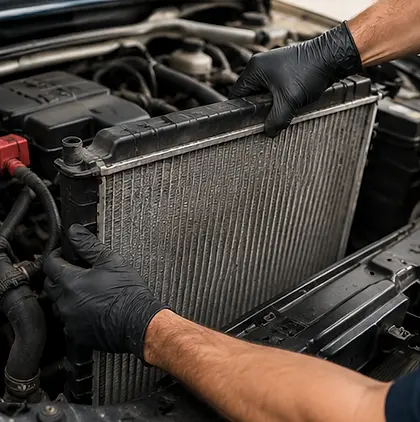
Radiator Replacement in Elmwood Park, NJ
If your car is running hot in Elmwood Park, NJ, don't wait. Overheating causes serious engine damage fast. At Mike Autoservice Center, we handle radiator replacement from diagnosis through final coolant flush.
Most jobs are done the same day. Call ahead so we can confirm parts are in stock for your vehicle.
This page covers:
-
Signs your radiator is failing
-
What the repair involves
-
How long a new radiator lasts

Signs Your Car Needs a New Radiator
Elmwood Park drivers often notice the first warning signs before a radiator fully fails. Catching them early keeps a small repair from turning into engine replacement.
Watch for these signs:
-
Coolant pooling under the car or a low coolant warning light
-
Temperature gauge climbing toward the red zone
-
Discolored, rusty, or oily fluid in the coolant reservoir
-
Steam rising from under the hood
Stop-and-go traffic on Route 46 and River Road pushes cooling systems hard — especially in summer. If you see any of these signs, bring your car in before the problem gets worse.
Why a Failing Radiator Is an Urgent Repair
A small coolant leak can look harmless. It isn't. Even a slow drip can boil off enough coolant to warp your cylinder head within just a few miles of driving. Mechanics warn that coolant entering the combustion chamber can lead to engine teardowns and repair bills that far exceed the original problem.
Many drivers in the area near the Midland Park border make short trips — errands, school runs, quick commutes. Short-trip driving means your engine never fully cools down between drives. That puts extra stress on an already-weakened cooling system.
If you spot a leak or your temperature gauge is climbing, call us. Waiting a few days can turn a radiator job into a much bigger repair bill.
What are the signs I need radiator replacement in Elmwood Park, NJ?
A failing radiator can no longer keep coolant at the right temperature. Your engine starts to overheat, and damage happens fast if you keep driving.
-
Coolant leaking under the car or a low coolant warning light
-
Temperature gauge climbing into the red zone
-
Discolored, rusty, or oily coolant in the reservoir

What Happens During a Radiator Replacement
If you've never had this done before, here's what to expect at our Elmwood Park auto repair shop.
We start with a pressure test to confirm the radiator is the source of the problem. From there, we drain the old coolant, remove the failed radiator, and install the new one. We finish with a fresh coolant flush and a system check before your car leaves the lot.
Most jobs take 2–4 hours. We stock radiators for common commuter vehicles — Honda, Toyota, Ford — so parts delays are rare. Radiator replacement is one of several cooling system repairs we handle at Mike Auto service Center, including coolant flushes, hose replacement, and heater core repair in Elmwood Park, NJ.
Other Parts Smart Drivers Replace at the Same Time
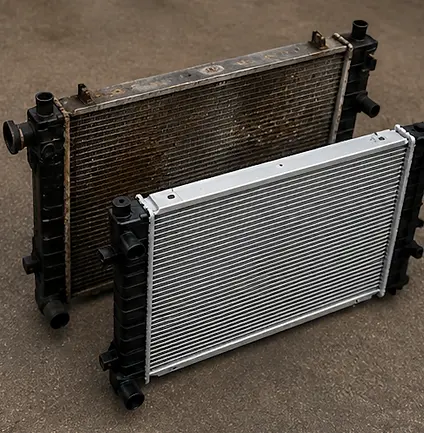
While your radiator is already out, it's a smart time to replace a few low-cost parts in the same labor window.
We recommend checking these at the same visit:
-
Thermostat — inexpensive and often worn by the time the radiator fails
-
Radiator cap — a weak cap causes pressure loss and overheating
-
Upper and lower hoses — rubber hoses degrade faster in Bergen County's freeze-thaw winters
Replacing these now avoids a second labor charge down the road. Ask us which ones need attention when you bring your car in.
How Long a New Radiator Lasts with Proper Care
A quality radiator lasts 8–10 years when you stay on top of basic maintenance. The most important step is routine coolant flushes every 2–3 years.
One thing Elmwood Park drivers should know — hard water in parts of this area accelerates mineral buildup inside the cooling system. Using a distilled water and coolant mix instead of tap water makes a real difference in how long your new radiator holds up.
Keep up with flushes, watch your coolant level, and your new radiator should give you years of reliable service.
When Radiator Repair Makes Sense vs. Full Replacement
Not every radiator problem requires a full replacement. A small crack in a plastic tank or a minor leak at a fitting may be repairable at lower cost.
Full replacement is usually the right call when:
-
The aluminum core is damaged or corroded through
-
The radiator has multiple leak points
-
The unit is old and already running on borrowed time
Shops in the Elmwood Park area near the Passaic River corridor see more undercarriage rust than most. Before we recommend repair or replace, we inspect the brackets and mounts too — a rusty mount can damage a new radiator fast.